
Sigma 300-600mm F/4 DG OS Sport Lens

Sigma 300-600mm F4 DG OS Sports: The Ultimate Ultra-Telephoto Zoom Lens
If you’re passionate about capturing wildlife, sports, or action, the new Sigma 300-600mm F4 DG OS Sports lens is a game-changer. This innovative ultra-telephoto zoom lens combines the flexibility of a zoom with the exceptional image quality and brightness you’d expect from a prime lens—making it a must-have for serious photographers.
Prime Performance, Zoom Freedom
Traditionally, prime lenses are known for their superior optical quality, but they lock you into a single focal length. The Sigma 300-600mm F4 DG OS Sports breaks this mold, offering the freedom to zoom from 300mm to 600mm without sacrificing sharpness or clarity. Its inner zoom mechanism keeps the center of gravity stable, ensuring smooth handling across the entire zoom range.
Cutting-Edge Optics
Inside, you’ll find 28 lens elements in 21 groups, including advanced FLD and SLD glass. This sophisticated design corrects chromatic aberrations and other optical flaws, delivering crisp, vibrant images at every focal length. Whether you’re shooting distant wildlife or fast-paced sports, you’ll get the kind of detail and color accuracy that professionals demand.
Fast Autofocus & Powerful Stabilization
Speed matters when the perfect shot lasts only a moment. Sigma’s High-response Linear Actuator (HLA) motor delivers rapid, precise autofocus—even with the lens’s large F4 aperture. Plus, the OS2 optical stabilization algorithm provides up to 5.5 stops of shake reduction at 600mm, helping you nail sharp images in challenging conditions. Choose between two stabilization modes: one for general shooting and another optimized for panning shots.
Built for the Field
Durability and usability are at the heart of the Sigma Sports line. The lens barrel is crafted from magnesium alloy, while the hood uses lightweight carbon fiber. A special thermal insulation paint keeps the lens cool during long outdoor shoots, and the weather-sealed construction protects against dust and moisture. Maintenance is easy, thanks to water- and oil-repellent coatings on the front element.
Enhanced Features for Creative Control
Sigma has packed this lens with features to support your creative vision:
Function Ring: Instantly shift focus to a preset position or smoothly adjust focus speed for video work.
Tripod Socket: Durable, smooth-rotating, and compatible with Arca-Swiss clamps.
Drop-In Filter Holder: Supports standard 40.5mm filters, plus new circular polarizing and variable ND filters (sold separately).
Customizable Controls: Multiple AFL buttons, focus mode and limiter switches, OS mode selector, and more.
For L-Mount users, the lens is compatible with Sigma’s teleconverters, extending your reach up to 1,200mm with autofocus.
Final Thoughts
The Sigma 300-600mm F4 DG OS Sports lens is designed for photographers who refuse to compromise. It’s robust, versatile, and packed with technology to help you capture stunning images—no matter how fast the action or how far the subject.
Note: Due to high demand, new orders are currently on backorder until mid-2026.
Pricing & Availability in Canada and USA
Canada:
The Sigma 300-600mm F4 DG OS Sports lens is available for pre-order at major retailers such as Sigma Canada and Henry’s, with a retail price of $8,799.95 CAD. Due to high demand, new orders are currently on backorder and are not expected to ship until mid-2026. [sigmacanada.ca]
USA:
In the United States, the lens is listed at $6,599 USD at B&H Photo and other authorized dealers. The official launch was April 2025, but stock is limited and many retailers are offering pre-order or stock alerts. [bhphotovideo.com]
Note:
Pricing may vary slightly depending on the retailer and mount type (Sony E or L-Mount). Be sure to check with your preferred dealer for the latest availability and shipping estimates.
How Does the Sigma 300-600mm F4 DG OS Sports Compare?
1. Sigma 300-600mm F4 DG OS Sports
Focal Range: 300-600mm
Aperture: Constant F4
Weight: ~3.98 kg (8.8 lbs)
Price: $6,599 USD / $8,799 CAD
Mounts: Sony E, L-Mount
Key Features: Internal zoom, pro-grade build, 5.5 stops stabilization, drop-in filter, weather sealing, advanced controls
Strengths: Unique constant F4 zoom, prime-like sharpness, robust build, extensive controls
Weaknesses: Heavy, expensive, currently backordered [pcmag.com]
2. Sony FE 200-600mm F5.6-6.3 G OSS
Focal Range: 200-600mm
Aperture: F5.6-6.3 variable
Weight: 2.1 kg (4.65 lbs)
Price: ~$1,998 USD
Mount: Sony E
Strengths: Lighter, much more affordable, excellent for wildlife and sports, good stabilization
Weaknesses: Slower aperture (less light, less background blur), not as sharp at 600mm, less robust build
Best For: Enthusiasts, those needing reach on a budget [cameradecision.com]
3. Nikon Z 180-600mm F5.6-6.3 VR
Focal Range: 180-600mm
Aperture: F5.6-6.3 variable
Weight: 2.14 kg (4.7 lbs)
Price: ~$1,896 USD
Mount: Nikon Z
Strengths: Wide zoom range, affordable, lightweight, good stabilization
Weaknesses: Slower aperture, less background separation, not as sharp at long end
Best For: Nikon Z shooters wanting reach without breaking the bank [cameradecision.com]
4. Canon RF 600mm F4 L IS USM
Focal Range: 600mm (prime)
Aperture: F4
Weight: 3.1 kg (6.8 lbs)
Price: ~$14,499 USD
Mount: Canon RF
Strengths: Legendary sharpness, fast AF, lighter than Sigma, pro build
Weaknesses: Fixed focal length, extremely expensive
Best For: Canon professionals needing the absolute best at 600mm [bhphotovideo.com]
5. Sigma 150-600mm F5-6.3 DG DN OS Sports
Focal Range: 150-600mm
Aperture: F5-6.3 variable
Weight: 2.1 kg (4.6 lbs)
Price: ~$1,499 USD
Mounts: Sony E, L-Mount
Strengths: Affordable, lighter, good reach, solid performance
Weaknesses: Slower aperture, less sharpness and background blur than 300-600mm F4
Best For: Budget-conscious shooters, travel [cameradecision.com]
Sample images:

See also:



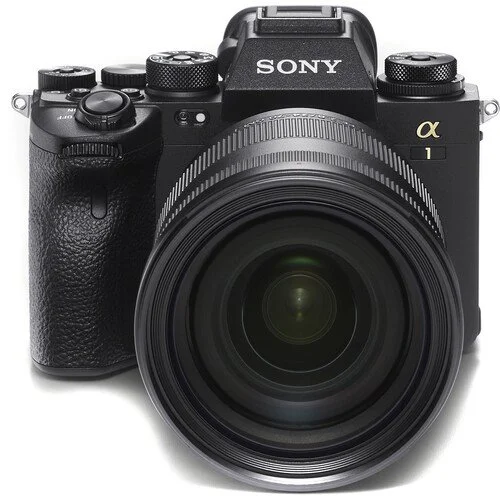
Sony A1 vs Nikon Z9/Z8 vs Canon R5
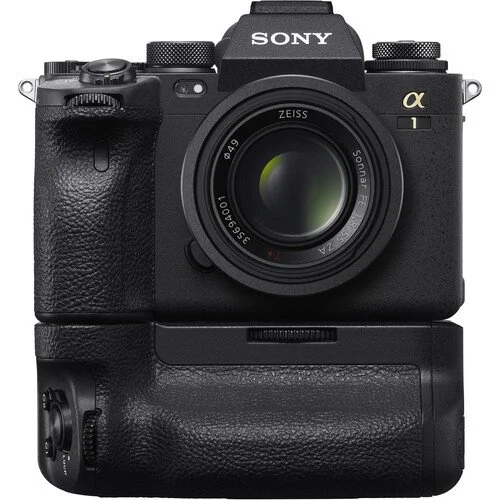
Sony Alpha 1
Sony A1 and Nikon Z9 are two flagship cameras from renowned manufacturers, offering top-of-the-line features and capabilities. Let's compare their key features to see how they stack up against each other:
Image Sensor:
Sony A1: 50.1-megapixel full-frame Exmor RS BSI CMOS sensor.
Nikon Z9: Rumored to feature a high-resolution full-frame sensor, details yet to be disclosed.
Autofocus System:
Sony A1: 759 phase-detection AF points, Real-time Eye AF, and Real-time Tracking.
Nikon Z9: Rumored to have an advanced AF system, details yet to be disclosed.
Continuous Shooting Speed:
Sony A1: Up to 30 frames per second.
Nikon Z9: Rumored to have high-speed continuous shooting capabilities, details yet to be disclosed.
Video Recording:
Sony A1: 8K video recording at 30 frames per second, 4K at up to 120 frames per second.
Nikon Z9: Rumored to offer 8K video recording and advanced video features, details yet to be disclosed.
Body and Build:
Sony A1: Robust and ergonomic design with a magnesium alloy chassis.
Nikon Z9: Expected to have a durable and weather-sealed body.
Electronic Viewfinder (EVF):
Sony A1: 9.44 million-dot EVF with a 240fps refresh rate.
Nikon Z9: EVF details yet to be disclosed.
Connectivity:
Sony A1: Wi-Fi, Bluetooth, USB-C, and dual card slots (CFexpress Type A and SD).
Nikon Z9: Connectivity details yet to be disclosed.
Battery Life:
Sony A1: Rated for approximately 530 shots per charge (CIPA).
Nikon Z9: Battery life details yet to be disclosed.
Other Features:
Sony A1: Real-time FTP background transfer, customizable controls, high-resolution LCD screen.
Nikon Z9: Features yet to be disclosed.
It's important to note that some of the details regarding the Nikon Z9 are still speculative, as the camera has not been officially released at the time of writing. Therefore, it's recommended to refer to official announcements and reviews for the most accurate and up-to-date information on the Nikon Z9.
Both cameras are expected to offer exceptional performance and cater to professional photographers and enthusiasts who demand the best in terms of image quality, autofocus capabilities, and advanced features. Ultimately, the choice between the Sony A1 and Nikon Z9 will depend on individual preferences, shooting requirements, and the complete feature set provided by each camera.
Sony A1 vs Canon R5 features comparison
Let's compare the key features of the Sony A1 and Canon R5 to see how they stack up against each other:
Image Sensor:
Sony A1: 50.1-megapixel full-frame Exmor RS BSI CMOS sensor.
Canon R5: 45-megapixel full-frame CMOS sensor.
Autofocus System:
Sony A1: 759 phase-detection AF points, Real-time Eye AF, and Real-time Tracking.
Canon R5: Dual Pixel CMOS AF II with 1,053 AF points, Real-time Eye AF, and Animal AF.
Continuous Shooting Speed:
Sony A1: Up to 30 frames per second.
Canon R5: Up to 12 frames per second with the mechanical shutter, up to 20 frames per second with the electronic shutter.
Video Recording:
Sony A1: 8K video recording at 30 frames per second, 4K at up to 120 frames per second.
Canon R5: 8K video recording at 30 frames per second (oversampled from 8.8K), 4K at up to 120 frames per second (oversampled from 5.1K).
Body and Build:
Sony A1: Robust and ergonomic design with a magnesium alloy chassis.
Canon R5: Weather-sealed body with a magnesium alloy frame.
Electronic Viewfinder (EVF):
Sony A1: 9.44 million-dot EVF with a 240fps refresh rate.
Canon R5: 5.76 million-dot OLED EVF with a 120fps refresh rate.
Connectivity:
Sony A1: Wi-Fi, Bluetooth, USB-C, and dual card slots (CFexpress Type A and SD).
Canon R5: Wi-Fi, Bluetooth, USB-C, and dual card slots (CFexpress and SD).
Battery Life:
Sony A1: Rated for approximately 530 shots per charge (CIPA).
Canon R5: Rated for approximately 320 shots per charge (CIPA).
Other Features:
Sony A1: Real-time FTP background transfer, customizable controls, high-resolution LCD screen.
Canon R5: In-body Image Stabilization (IBIS), vari-angle touchscreen LCD, Dual Pixel RAW.
Both the Sony A1 and Canon R5 are highly capable cameras, particularly suited for professional photographers and videographers. The Sony A1 offers a higher continuous shooting speed, a higher-resolution EVF, and a higher battery life compared to the Canon R5. On the other hand, the Canon R5 features a higher-resolution sensor, Dual Pixel RAW, and the ability to shoot oversampled 8K video.
The choice between the Sony A1 and Canon R5 depends on individual preferences, shooting needs, and the overall ecosystem of lenses and accessories that best suit your requirements. It is recommended to consider these factors, as well as the specific performance and features that are most important to you, before making a decision.
If you're considering the Sony A1 over the Nikon Z9 and Canon R5, here are some reasons why the Sony A1 may be the better choice for you:
Superior Continuous Shooting Speed: The Sony A1 offers an impressive continuous shooting speed of up to 30 frames per second, surpassing both the Nikon Z9 and Canon R5. This high-speed capability is ideal for capturing fast-action sports, wildlife, and other high-speed subjects where every moment counts.
Exceptional Autofocus Performance: The Sony A1 features an advanced autofocus system with 759 phase-detection AF points, Real-time Eye AF, and Real-time Tracking. This ensures fast and accurate subject detection and tracking, making it easier to capture sharp and well-focused images, even in challenging shooting conditions.
Extensive Video Capabilities: The Sony A1 excels in video recording, offering 8K video at 30 frames per second and 4K video at up to 120 frames per second. If you're a professional videographer or content creator, the A1's high-resolution video capabilities provide tremendous flexibility and enable you to capture stunning, cinematic footage.
Proven Sony E-mount Lens Ecosystem: Sony has built an extensive lineup of high-quality lenses for their E-mount system. The availability of a wide range of lenses gives you more options to suit your specific photography needs, whether it's wide-angle landscapes, telephoto sports, or macro photography.
Established Track Record: Sony's Alpha series cameras, including the A1, have a strong reputation in the industry for their innovation, performance, and reliability. Sony has consistently pushed the boundaries of camera technology and has a proven track record of delivering cutting-edge features and advancements.
While the Nikon Z9 and Canon R5 are also exceptional cameras with their own strengths, the Sony A1 stands out in terms of its continuous shooting speed, autofocus performance, and video capabilities. However, it's crucial to consider your specific shooting requirements, lens preferences, and overall ecosystem compatibility when making your final decision.
Sony FE 100-400mm f/4.5-5.6 GM OSS Lens VS Sony FE 200-600mm f/5.6-6.3 G OSS Lens
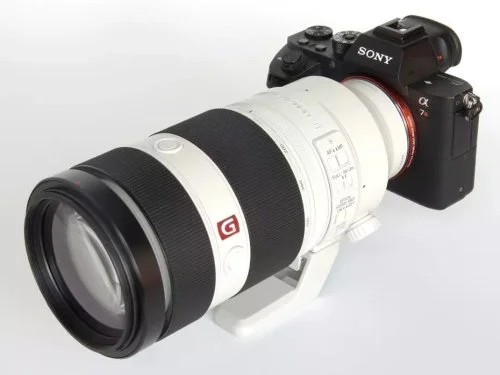
Today, we're comparing two powerful telephoto zoom lenses from Sony: the Sony FE 100-400mm f/4.5-5.6 GM OSS Lens and the Sony FE 200-600mm f/5.6-6.3 G OSS Lens. Both lenses are part of Sony's highly regarded G Master (GM) and G series, respectively, and are designed for Sony's full-frame E-mount cameras. Let's dive into the details and see how they stack up against each other.
Starting with the Sony FE 100-400mm f/4.5-5.6 GM OSS Lens, this lens offers a versatile focal range suitable for a wide range of photography genres. With a maximum aperture of f/4.5-5.6, it provides excellent light gathering capabilities and impressive bokeh. The lens incorporates a high-quality optical design with 22 elements in 16 groups, including one Super ED and two ED elements, which effectively minimize chromatic aberrations and ensure outstanding image quality.
The FE 100-400mm GM lens features Sony's Nano AR coating, which reduces flare and ghosting. It also has a built-in Optical SteadyShot (OSS) image stabilization system that compensates for camera shake, allowing you to shoot handheld at slower shutter speeds. The lens is weather-sealed, making it suitable for outdoor use in various conditions.
Sony FE 100-400mm f/4.5-5.6 GM OSS Lens VS Sony FE 200-600mm f/5.6-6.3 G OSS Lens
No right or wrong choices here.

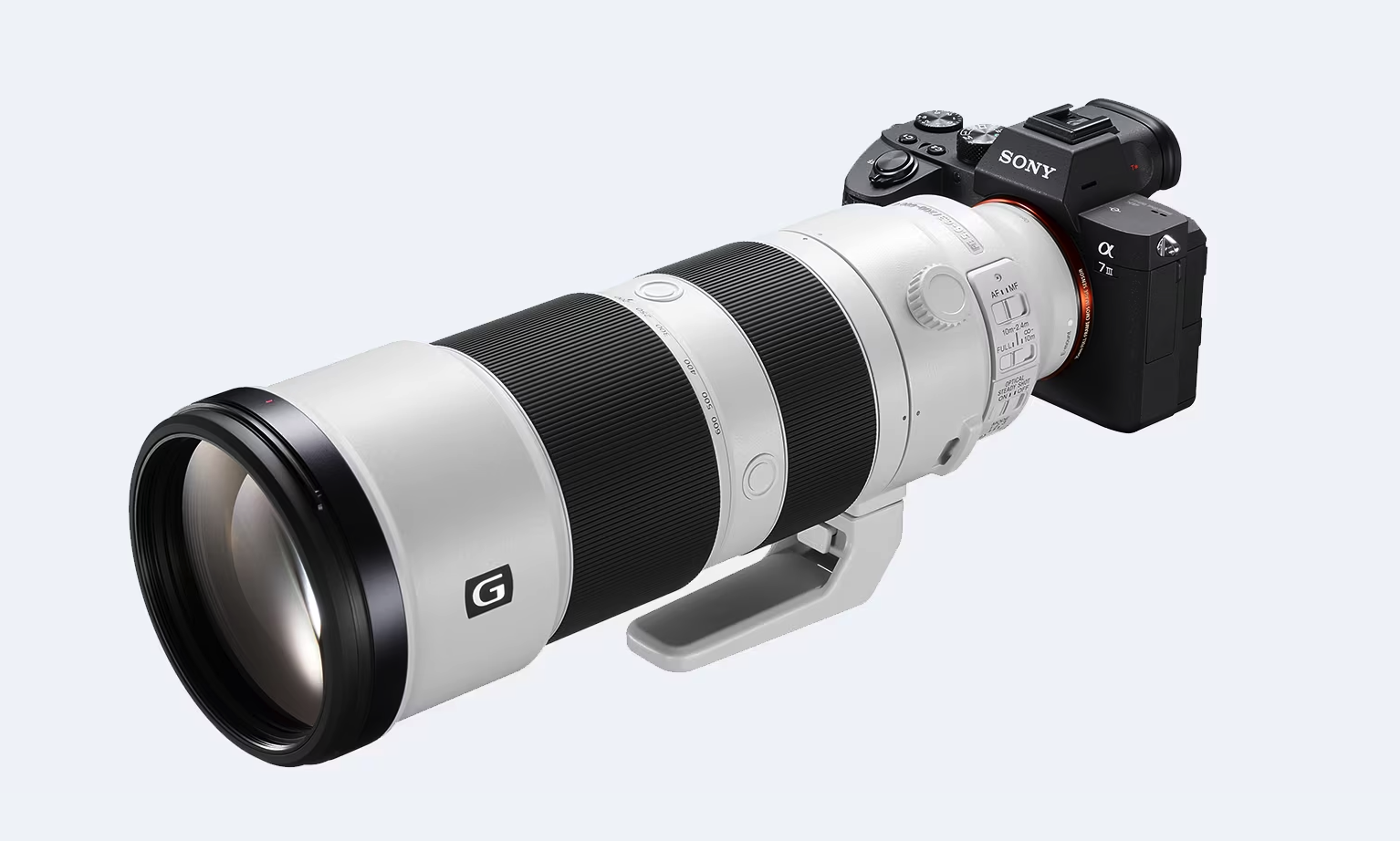
Now let's move on to the Sony FE 200-600mm f/5.6-6.3 G OSS Lens. As the name suggests, this lens offers an even longer focal length range, making it a great choice for wildlife, sports, and other distant subjects. With a maximum aperture of f/5.6-6.3, it captures a remarkable amount of light, although it is slightly narrower than the FE 100-400mm GM lens.
The FE 200-600mm lens features an advanced optical design with 24 elements in 17 groups, including five ED elements, which ensure exceptional image quality with minimal aberrations. It also incorporates Sony's Nano AR coating to reduce flare and ghosting. Like the FE 100-400mm GM lens, it has built-in Optical SteadyShot (OSS) image stabilization, providing stability when shooting handheld.
In terms of size and weight, the FE 200-600mm lens is understandably larger and heavier due to its extended focal length range. It measures approximately 318mm in length and weighs around 2.1 kg, while the FE 100-400mm GM lens measures around 205mm and weighs approximately 1.4 kg. It's worth considering your shooting needs and portability requirements when choosing between the two.
Now, let's summarize the key specifications of both lenses for a quick comparison:
Sony FE 100-400mm f/4.5-5.6 GM OSS Lens:
Focal Length Range: 100-400mm
Maximum Aperture: f/4.5-5.6
Lens Construction: 22 elements in 16 groups
Image Stabilization: Yes (Optical SteadyShot)
Weather-Sealing: Yes
Dimensions: Approximately 205mm (length)
Weight: Approximately 1.4 kg
Sony FE 200-600mm f/5.6-6.3 G OSS Lens:
Focal Length Range: 200-600mm
Maximum Aperture: f/5.6-6.3
Lens Construction: 24 elements in 17 groups
Image Stabilization: Yes (Optical SteadyShot)
Weather-Sealing: Yes
Dimensions: Approximately 318mm (length)
Weight: Approximately 2.1 kg
In conclusion, both the Sony FE 100-400mm f/4.5-5.6 GM OSS Lens and the Sony FE 200-600mm f/5.6-6.3 G OSS Lens are exceptional telephoto zoom lenses that deliver impressive image quality and versatility. The FE 100-400mm GM lens offers a slightly shorter focal length range but provides a more compact and lightweight design. On the other hand, the FE 200-600mm lens offers an extended focal length range for those who require the additional reach. Consider your specific shooting needs, portability preferences, and budget to choose the lens that suits you best. Either way, you can expect exceptional performance from both lenses in the Sony E-mount system.
Sony FE 70-200mm f/2.8 GM OSS II Lens
Sony FE 70-200mm f/2.8 GM OSS II Lens Review:
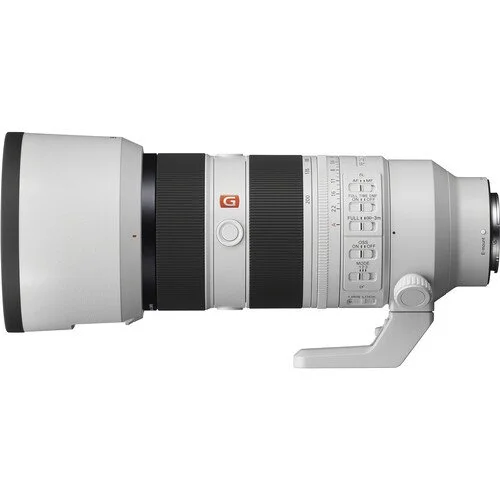
Design and Build: The Sony FE 70-200mm f/2.8 GM OSS II lens is a top-performing lens with improved features, autofocus, and image quality performance. It is 29% lighter than its predecessor, making it more portable and easier to handle. The lens has a robust build quality, is weather-sealed and has a sleek finish.
Image Quality: The lens produces outstanding image quality with excellent sharpness, color, and contrast. The f/2.8 maximum aperture combined with the 70-200mm zoom range makes it a valuable asset to portrait, event photographers, and photojournalists. The lens has a unique bokeh rendering, creating beautiful out-of-focus backgrounds.
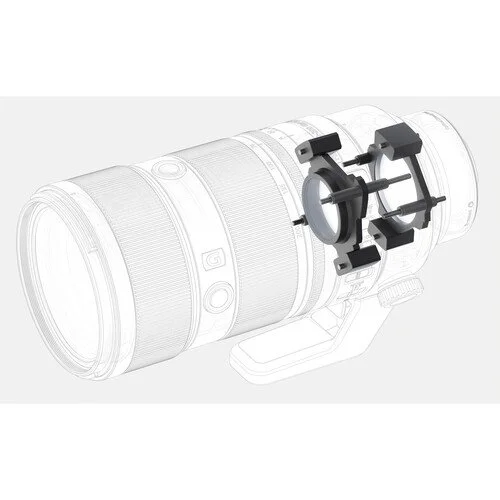
Autofocus: The autofocus system on the Sony FE 70-200mm f/2.8 GM OSS II is fast, accurate, and quiet. It has three focus lock buttons, which allow photographers to lock focus in various positions. The lens also has a linear motor that helps in tracking fast-moving subjects.
Compatibility with 1.4x tc and 2x tc: The lens is compatible with teleconverters, allowing for a maximum focal length of 280mm at f/4. The autofocus performance is still excellent with the 1.4x tc, but it slows down slightly with the 2x tc.
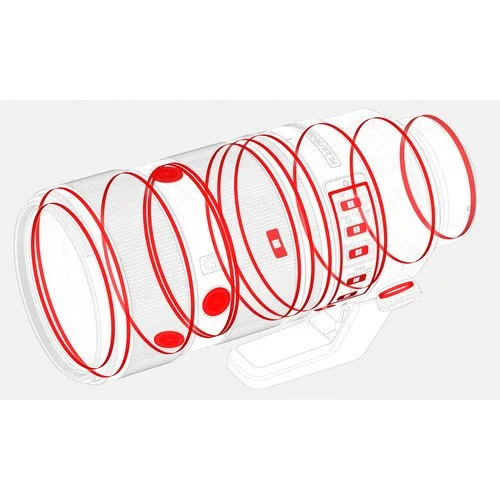
Build Quality: Build like a tank, fully weather sealed. Includes a very reliable autofocus motor and customizable buttons, manages a lot of settings with durable settings switches, and includes a removable foot.
Value: The Sony FE 70-200mm f/2.8 GM OSS II is an expensive lens, with a price tag of $2800 USD. However, it is a highly recommended lens for professional and serious amateur photographers with Sony-based kits. The lens is lightweight compared to its predecessor and is essential for anyone who wants to improve their photography skills.
Compared with 70-200mm lenses of other brands like Nikon, Canon, and older Sony lenses: The Sony FE 70-200mm f/2.8 GM OSS II has no direct competitors on the FE platform. The Tamron 70-180mm F2.8VXD is a similar alternative without lens stabilization or significant features. The Tamron 35-150mm F2-F2.8 VXD combines portions of the traditional 24-70mm and 70-200mm ranges in one lens, closer to the GM in terms of features, build quality and autofocus performance. The 70-200 II lens is also lighter than Canon's RF 70-200mm F2.8L IS.
Rating and Average Price: The Sony FE 70-200mm f/2.8 GM OSS II lens is an excellent lens, and it deserves a rating of 9/10. The average price of the lens is $2800 USD, which is on the higher side compared to other lenses in this category.
Conclusion: The Sony FE 70-200mm f/2.8 GM OSS II lens is an outstanding lens with the excellent build quality, image quality, and autofocus performance. It is a valuable asset for portrait, event photographers, and photojournalists. The lens is expensive, but it is worth the investment for professional and serious amateur photographers.

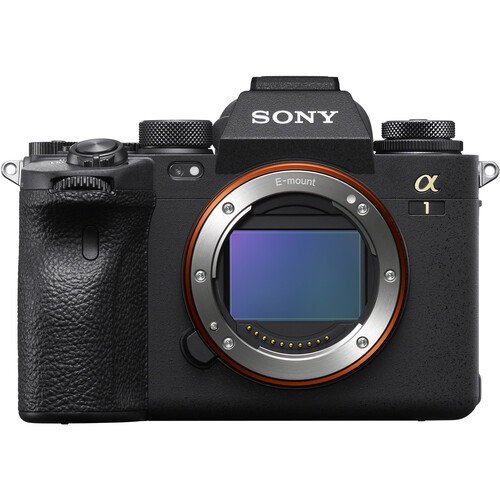
The Alpha Sony A1

Introduction:

As an avid wildlife photographer, I have had the pleasure of using various high-end cameras over the years. However, my recent experience with the Sony A1 has left me in awe. This review aims to highlight the exceptional features and capabilities of the Sony A1, specifically tailored for wildlife photography enthusiasts like myself.
Image Quality: The image quality produced by the Sony A1 is simply outstanding. With its full-frame 50.1-megapixel sensor and advanced BIONZ XR image processor, the camera delivers unparalleled clarity and detail in every shot. From the intricate patterns on a bird's feathers to the piercing gaze of a predator, the A1 ensures that no nuance goes unnoticed.
Autofocus Performance: When it comes to capturing wildlife in action, autofocus speed and accuracy are crucial. The Sony A1 excels in this aspect, thanks to its groundbreaking Real-time Eye AF and Animal Eye AF capabilities. Whether it's a fleeting moment of a hummingbird in flight or the intense stare of a big cat, the A1 effortlessly locks focus on the subject, ensuring sharpness and precision in every frame.
High-Speed Continuous Shooting: The Sony A1's ability to shoot at an astonishing 30 frames per second is a game-changer for wildlife photographers. It allows me to capture those split-second moments that would have otherwise been missed. The buffer capacity is also impressive, ensuring that I can keep shooting without worrying about missing crucial shots during bursts of action.
Incredible Low-Light Performance: Wildlife encounters often happen during the early morning or late evening when light conditions are challenging. The Sony A1's remarkable low-light performance, combined with its impressive ISO range (up to 102,400), allows me to confidently capture stunning images even in dimly lit environments. The minimal noise levels and impressive dynamic range make the A1 a true standout in difficult lighting situations.
Advanced Image Stabilization: When photographing wildlife, it's not always feasible to use a tripod. The Sony A1's built-in 5-axis image stabilization system is a lifesaver, providing exceptional stability and minimizing camera shake. This feature allows me to shoot handheld for extended periods, even with long telephoto lenses, resulting in sharp, blur-free images.
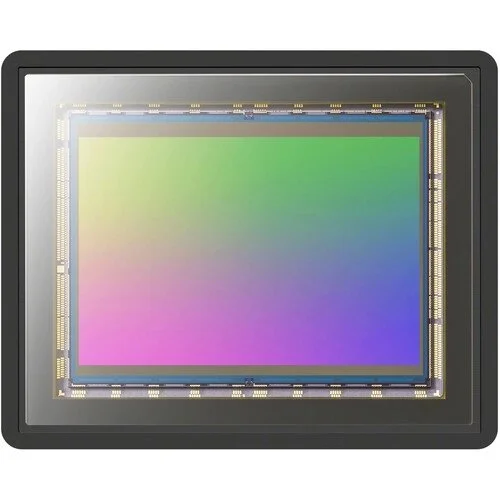
Unparalleled Precision: Sony A1 Autofocus System Sets the Bar for Wildlife Photography
Introduction: When it comes to wildlife photography, capturing sharp, focused images of fast-moving subjects can be a challenge. However, the Sony A1 camera's autofocus system rises above the rest, delivering a level of precision and accuracy that is truly best in class. In this review, we will explore the remarkable capabilities of the Sony A1's autofocus system and how it revolutionizes wildlife photography.
Real-time Eye AF and Animal Eye AF: One of the standout features of the Sony A1 is its Real-time Eye AF and Animal Eye AF technology. This cutting-edge system uses artificial intelligence to detect and track the eyes of both humans and animals. When photographing wildlife, the A1 effortlessly locks focus on the subject's eye, ensuring unparalleled sharpness and bringing out the true essence of the animal. Whether it's a tiny hummingbird or a majestic predator, the A1's autofocus system ensures that every shot is tack sharp.
Wide Coverage and Fast Tracking: The Sony A1 boasts an impressive 759 phase-detection autofocus points that cover approximately 92% of the image sensor. This extensive coverage allows for precise focusing across a wide range of compositions, even when the subject is off-center. Additionally, the A1's autofocus system excels in tracking moving subjects, making it ideal for capturing the dynamic movements of wildlife. With its exceptional tracking performance, the A1 ensures that you never miss a moment, no matter how fast-paced the action.

High-Speed Continuous Shooting with AF/AE Tracking: When photographing wildlife, timing is everything. The Sony A1's autofocus system works seamlessly with its high-speed continuous shooting capabilities, allowing for an incredible 30 frames per second with full autofocus and auto exposure tracking. This impressive speed enables you to capture the most fleeting moments in stunning detail, making the A1 a true game-changer for wildlife photographers.
Customizable AF Settings: The Sony A1 provides photographers with extensive customization options for the autofocus system. From adjusting tracking sensitivity to choosing AF area settings, the A1 offers flexibility to adapt to various wildlife photography scenarios. This level of customization ensures that the autofocus system caters to your specific shooting style and preferences, allowing you to achieve optimal results in any situation.
In the realm of wildlife photography, the Sony A1's autofocus system is unrivalled. Its Real-time Eye AF and Animal Eye AF, wide-coverage, fast tracking, and high-speed continuous shooting capabilities make it the ultimate tool for capturing stunning wildlife images with impeccable focus. Whether you're photographing birds in flight or elusive animals in their natural habitat, the Sony A1's autofocus system delivers unparalleled precision, setting the benchmark for excellence in wildlife photography. With the Sony A1, you can confidently push the boundaries of your craft and bring your wildlife photography to new heights.
Conclusion: The Sony A1 is an absolute powerhouse for wildlife photography. Its combination of superb image quality, lightning-fast autofocus, high-speed continuous shooting, low-light performance, and advanced image stabilization makes it an indispensable tool for capturing stunning wildlife moments. While it may come with a hefty price tag, the Sony A1 is undoubtedly a worthwhile investment for serious wildlife photographers who demand nothing but the best. With the Sony A1, be prepared to elevate your wildlife photography to new heights and capture nature's beauty like never before.

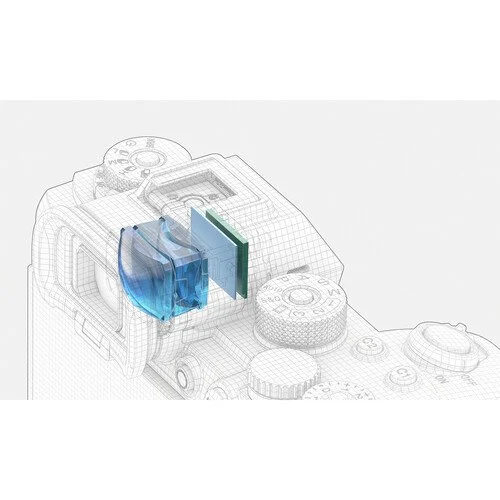
The Sony A1 camera features an electronic viewfinder (EVF) with an impressive resolution that provides photographers with a highly detailed and immersive viewing experience. Here are the specific details regarding the EVF resolution of the Sony A1:
Resolution: The EVF of the Sony A1 boasts an impressive resolution of 9.44 million dots. This high-resolution display ensures that photographers can view their subjects and scenes with exceptional clarity and detail.
Refresh Rate: In addition to the resolution, the Sony A1's EVF also offers a fast refresh rate of 240 frames per second. This ensures smooth and fluid motion when tracking moving subjects or when panning the camera.
Size: The size of the EVF on the Sony A1 is 0.64 inches, providing a large and comfortable viewing area for photographers. The large size helps in providing a clear and immersive viewing experience, making it easier to compose shots and assess image quality.
Eye Relief: The Sony A1's EVF also offers a generous eye relief distance, allowing users to comfortably view the electronic viewfinder even when wearing glasses. This ensures that photographers can fully utilize the EVF without any discomfort.
Overall, the Sony A1's EVF with its 9.44 million-dot resolution, fast refresh rate, large size, and generous eye relief distance offers an exceptional viewing experience, allowing photographers to accurately preview and compose their shots with great precision and confidence.
Sony FE 600mm f/4 GM OSS Lens
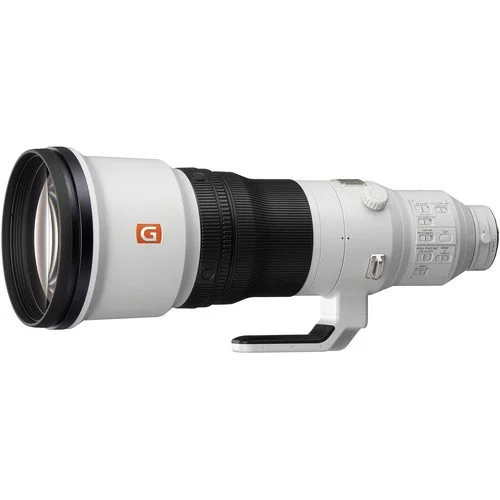
The Sony FE 600mm f/4 GM OSS Lens is an impressive piece of equipment that caters to the needs of professional sports and wildlife photographers. As a member of Sony's high-end G Master series, this lens offers exceptional image quality, advanced autofocus capabilities, and a robust build quality that ensures reliable performance even in demanding shooting conditions.
Here's a detailed review of the Sony FE 600mm f/4 GM OSS Lens.
Image Quality: The optical performance of the Sony FE 600mm f/4 GM OSS Lens is nothing short of excellent. With its super telephoto focal length and bright f/4 aperture, this lens is capable of producing stunningly sharp and detailed images. The lens incorporates several advanced technologies, including XA (extreme aspherical) and fluorite elements, to minimize chromatic aberrations and ensure high-resolution results. The bokeh rendering is also pleasing, thanks to the circular 11-blade aperture, which creates smooth and beautiful background blur.
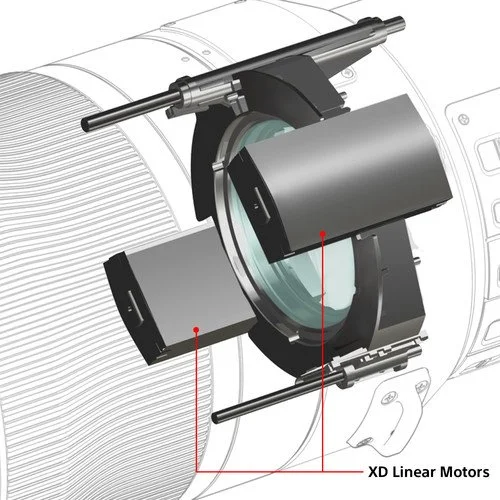
Autofocus Performance: The autofocus system of the Sony FE 600mm f/4 GM OSS Lens is incredibly fast, accurate, and reliable. It features Sony's Direct Drive SSM (Super Sonic wave Motor) technology, which enables quick and precise focusing, even on fast-moving subjects. The lens also incorporates advanced tracking algorithms, which work in conjunction with compatible Sony cameras to maintain focus on subjects with remarkable consistency. This makes it an excellent choice for capturing action-packed sports events or wildlife in motion.
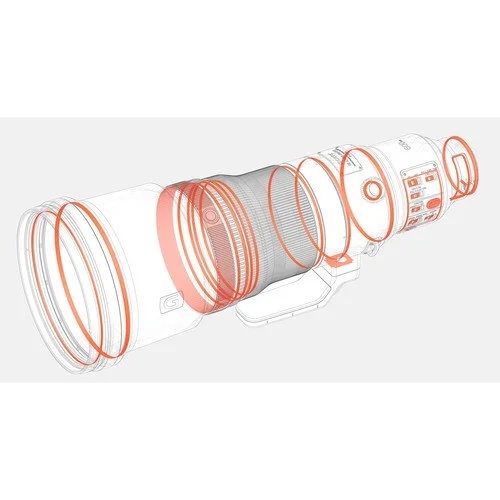
Lens weather-sealing.
Build Quality and Handling: Sony has spared no expense when it comes to the build quality of the FE 600mm f/4 GM OSS Lens. It features a durable and weather-sealed magnesium alloy construction, making it resistant to dust, moisture, and extreme temperatures. The lens barrel is well-balanced and comfortable to hold, thanks to thoughtful design considerations. Despite being a large and heavy lens (weighing approximately 6.7 lbs/3.04 kg), it is relatively compact for its focal length and can be easily handheld or mounted on a tripod using the integrated Arca-Swiss compatible foot.
Image Stabilization: The lens incorporates Sony's Optical SteadyShot (OSS) image stabilization technology, which provides up to 4 stops of stabilization. This feature is especially valuable when shooting handheld or in low-light conditions, as it helps to minimize the effects of camera shake and allows for sharper images. The combination of optical stabilization with the advanced autofocus system makes it easier to track and capture subjects with precision.
Compatibility and Lens Control: The Sony FE 600mm f/4 GM OSS Lens is designed for Sony's full-frame E-mount cameras, but it can also be used with APS-C sensor models, where it offers an equivalent focal length of 900mm. It supports all the advanced features of Sony's cameras, including Eye AF and continuous autofocus tracking. The lens also features customizable focus hold buttons and a focus range limiter switch, providing photographers with quick access to essential controls.
Overall, the Sony FE 600mm f/4 GM OSS Lens is a top-of-the-line telephoto lens that delivers exceptional image quality, fast autofocus performance, and robust build quality. While it comes with a premium price tag and is primarily aimed at professional photographers or enthusiasts with specific needs, it undoubtedly justifies its cost through its outstanding performance and reliability. If you're a wildlife or sports photographer who demands the best, the Sony FE 600mm f/4 GM OSS Lens is definitely worth considering. Sony FE 600mm f/4 GM OSS Lens is also compatible with Sony 1.4X and 2x Teleconverters.
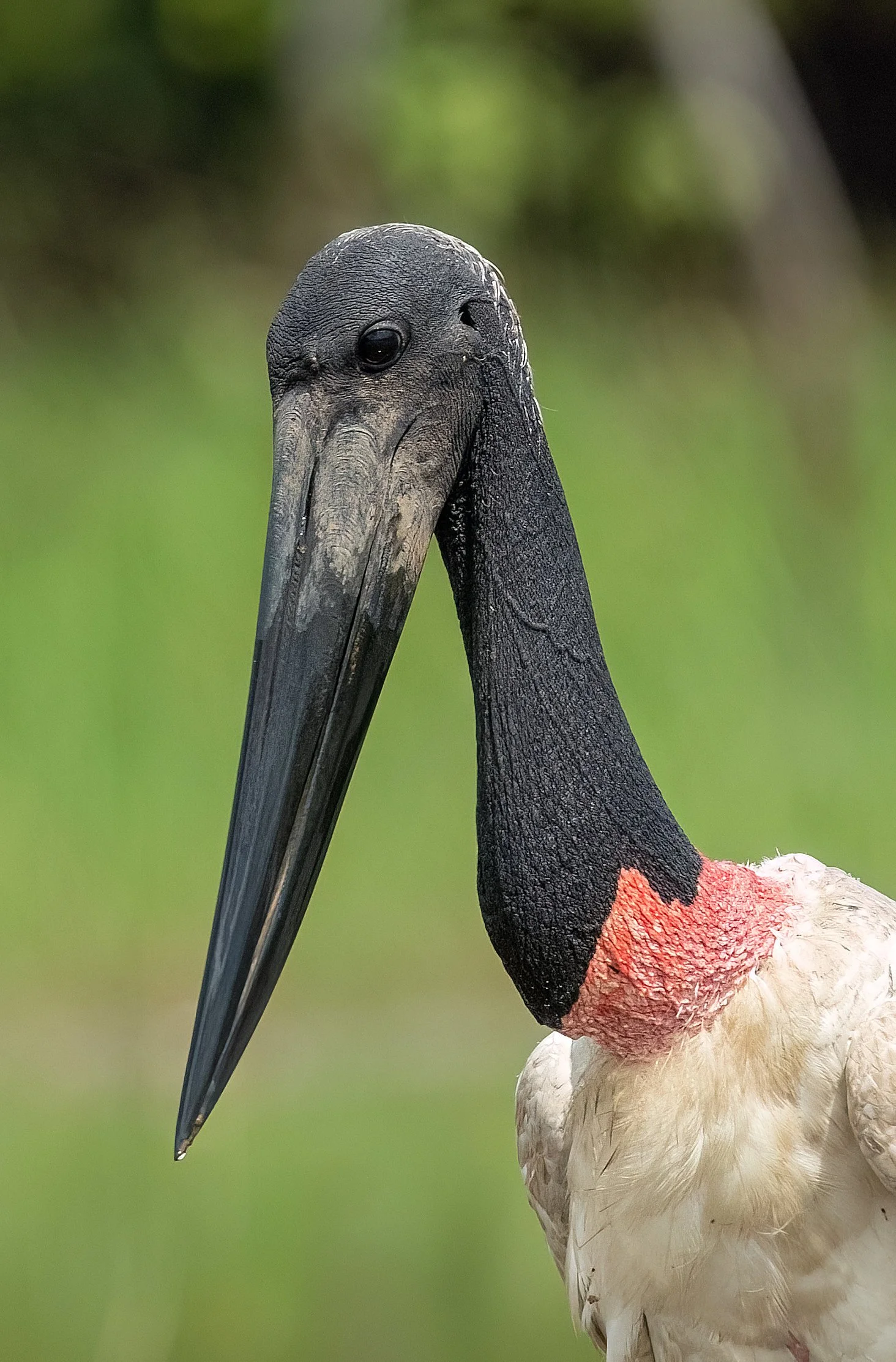
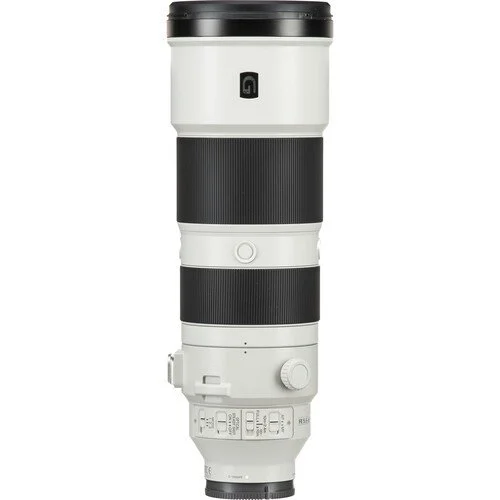
Sony FE 200-600mm f/5.6-6.3 G OSS Lens
Capturing the World with Precision: Sony FE 200-600mm f/5.6-6.3 G OSS Lens Review
Rating: ★★★★☆
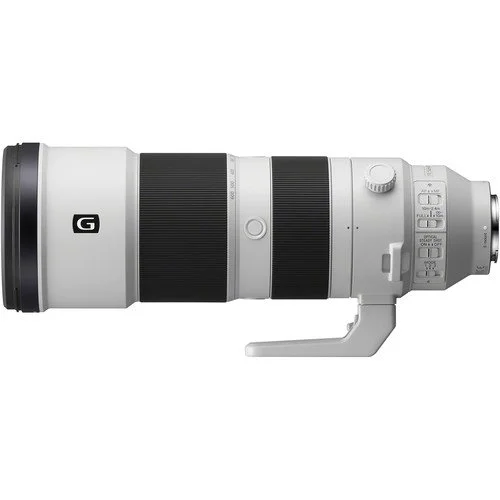
The Sony FE 200-600mm f/5.6-6.3 G OSS Lens is a versatile telephoto lens that offers an impressive zoom range, making it an ideal choice for wildlife and sports photographers. With its solid build quality, excellent image stabilization, and superb image quality, this lens is a reliable tool for capturing distant subjects with precision. Here's my in-depth review of the Sony FE 200-600mm f/5.6-6.3 G OSS Lens.

Build Quality: Sony has done an excellent job with the build quality of this lens. It feels solid in hand, thanks to the high-quality materials used in its construction. The lens features weather-sealing, ensuring that it can withstand challenging shooting conditions, be it rain or dust. The zoom and focus rings are smooth, offering a satisfying tactile experience.
Zoom Range and Focusing: The standout feature of the Sony FE 200-600mm lens is its impressive zoom range. Starting at 200mm, it extends all the way to 600mm, providing photographers with a versatile focal length to capture subjects both near and far. The zoom ring is well-damped and easy to operate, allowing for smooth adjustments.
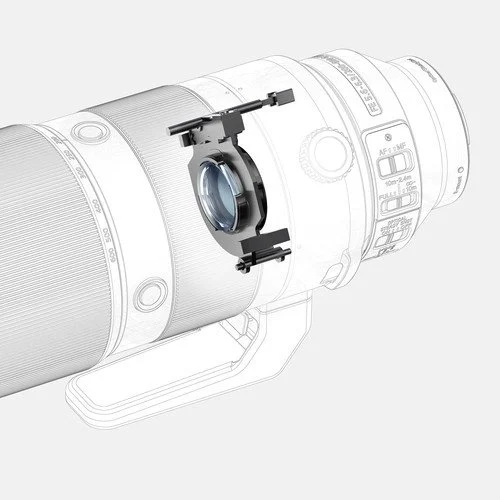
Autofocus performance is reliable and quick, even when tracking fast-moving subjects. The Direct Drive Super Sonicwave Motor (DDSSM) ensures silent and precise autofocus, which is essential in wildlife and sports photography. It also features a focus limiter switch that helps reduce focus hunting, enhancing the lens's overall performance.
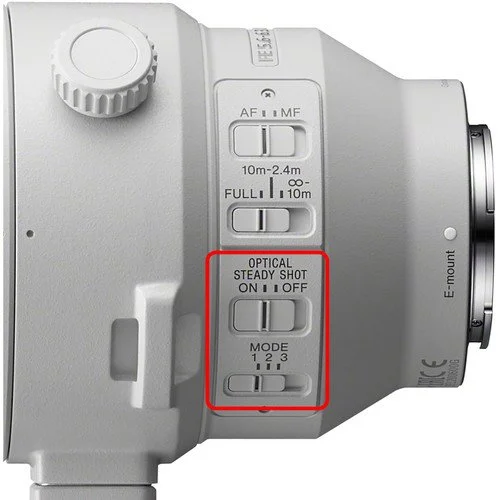
Image Stabilization: The built-in Optical SteadyShot (OSS) image stabilization in this lens is highly effective, providing up to 4.5 stops of stabilization. This feature is particularly valuable when shooting handheld at longer focal lengths, as it helps minimize camera shake and allows for sharper images. It greatly contributes to the lens's versatility, allowing photographers to capture stunning images even in low-light conditions.

Image Quality: The Sony FE 200-600mm f/5.6-6.3 G OSS Lens delivers outstanding image quality throughout its zoom range. The lens produces sharp and detailed images, with excellent contrast and minimal chromatic aberration. The nine-blade circular aperture produces pleasing bokeh, making subjects stand out against a smooth, creamy background. The lens also maintains good sharpness even when used wide open.
The lens coatings effectively reduce ghosting and flare, ensuring that images retain high contrast, even in challenging lighting situations. The overall image quality is impressive, and the lens showcases the optical expertise that Sony is known for.
Portability: Considering its focal length range, the Sony FE 200-600mm lens is relatively compact and lightweight. Although it is not a small lens, it is highly portable, making it suitable for photographers who need to shoot on location or while traveling. It balances well on Sony's full-frame mirrorless cameras, and the included tripod collar adds stability when using the lens on a tripod.
Conclusion: The Sony FE 200-600mm f/5.6-6.3 G OSS Lens is an excellent choice for wildlife, sports, and even astrophotography enthusiasts. Its impressive zoom range, reliable autofocus, and superb image quality make it a highly versatile telephoto lens. While it may not have the wide aperture of some prime lenses, it compensates with a reasonable f/5.6-6.3 aperture range, and the image stabilization system helps in low-light situations. If you're looking to capture distant subjects with precision, this lens is a valuable addition to your camera bag.
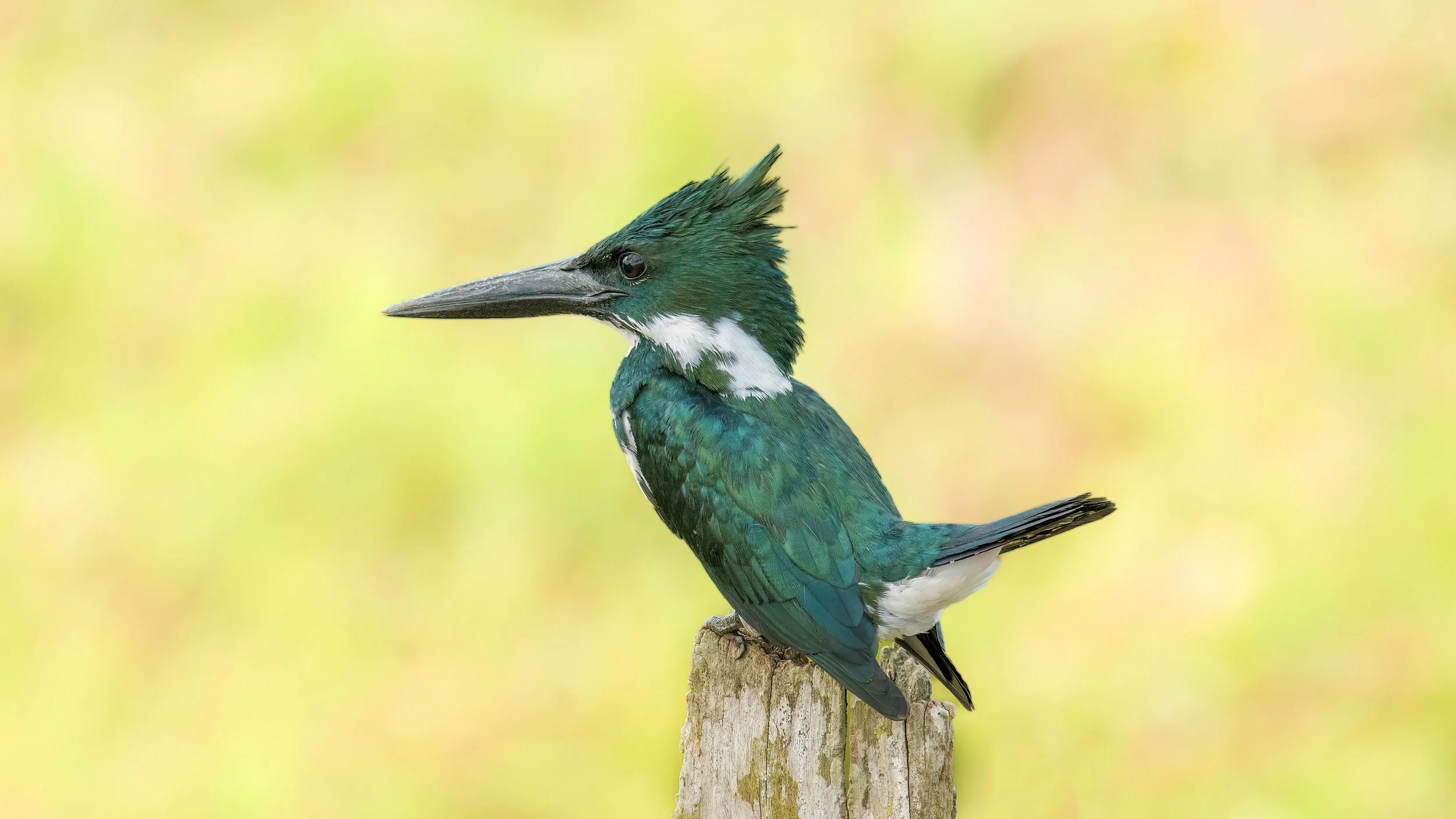
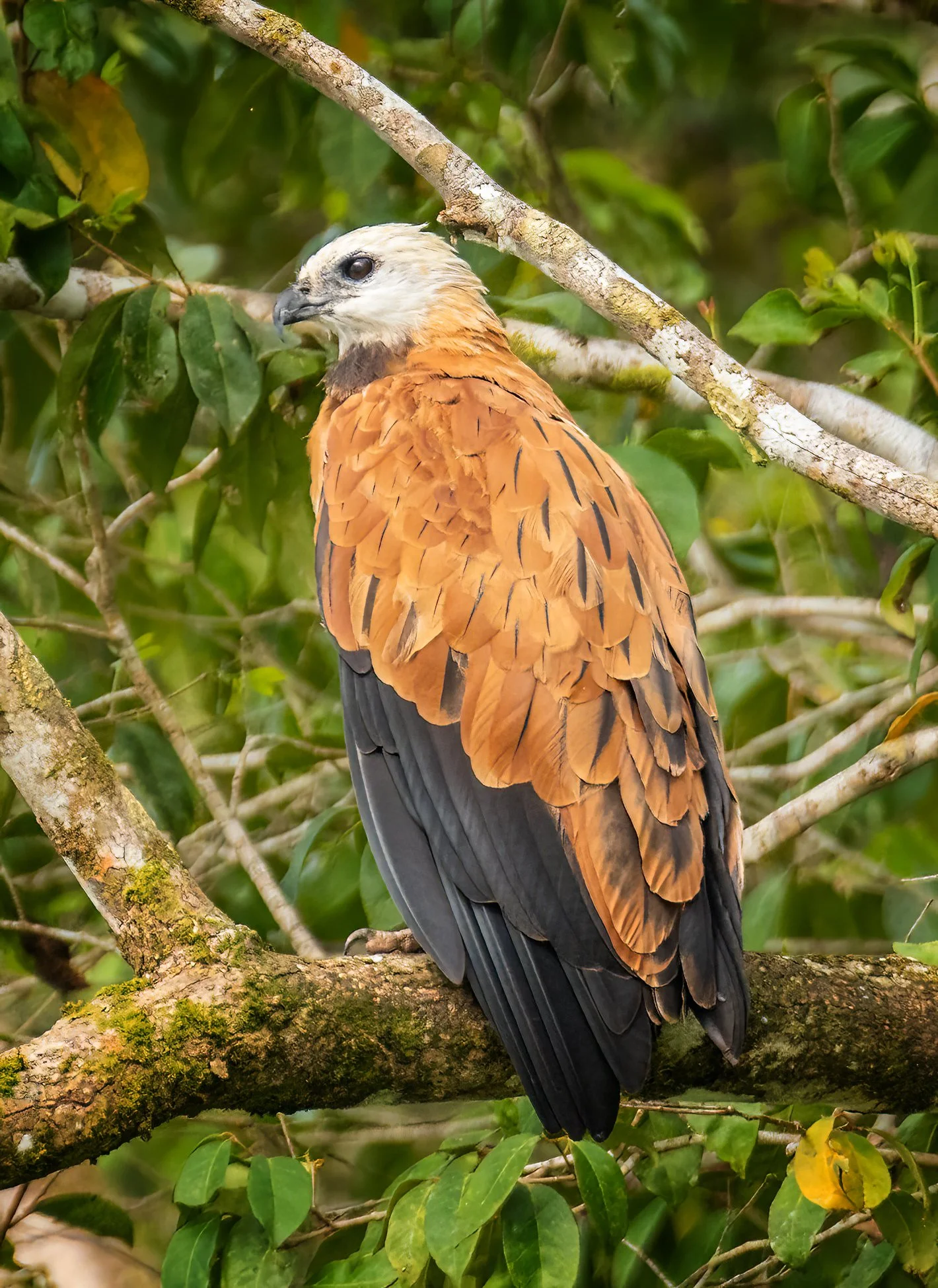
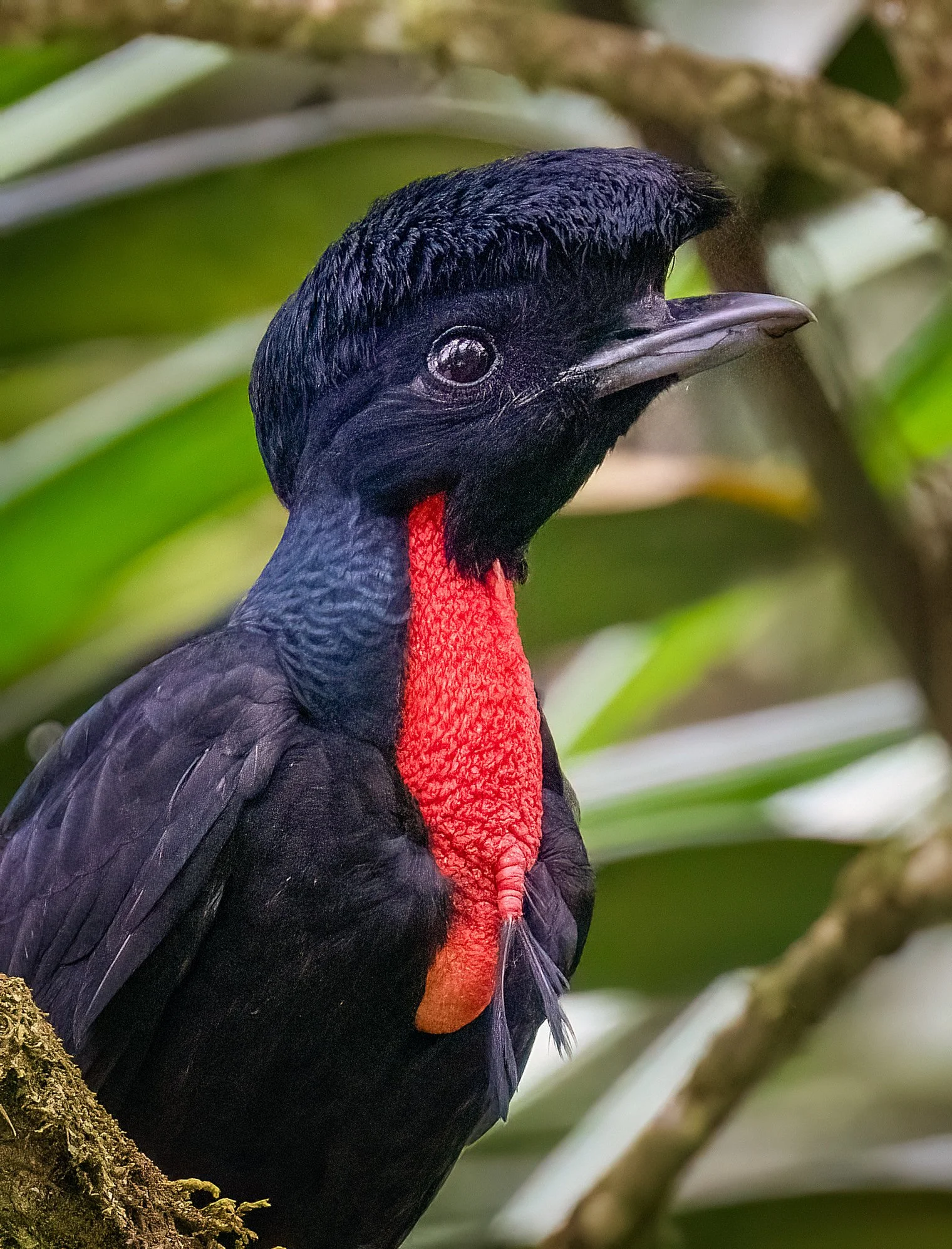
Amazon Kingfisher, Costa Rica
Nikon D850

Nikon D850 is One of my favourite cameras of all times. Some time ago I switched from Canon to Nikon and my first Nikon camera was Nikon D700. Honestly, I was just in love with that 12-megapixel little machine. It was first Nikon's affordable option for full frame DSLR sports and wildlife photography. As a D700 then the new Nikon D850 is a Jack of all trades. A very powerful and relatively fast option for my wildlife photography. Altho I also use a Nikon D500 for a backup or "GOOD WEATHER LONG RANGE" needs. The D500 is also an amazing camera but not as versatile as Nikon D850. A few months ago I had a pleasure to use D800 and D810. These two were cameras that I used for about 3 years and they had some flows for my kind of shooting and I will explain below comparing all of the above cameras with D850. During all these years I also shot cropped sensor cameras but I am not going to talk about them. I included D500 here because it's a very special member of the family and also very powerful in every way but we will talk later about that. Now the Nikon D850! The master, the dream machine...

Using Nikon's D810 and D800 as a pair I also felt like standing on one foot. These cameras are great for still photography with no argument. The Canon users were dreaming about the quality and dynamic range of D800. When the D810 came on the market, neither Canon or any other competition had anything close as Nikon's D800's series. The picture that was produced by D810 was simply stunning.

Shot with Nikon D810
The Canon 5DII and Canon 5DIII couldn't catch up with it. I am not going to go into the details and precisely compare these cameras but I would just say all of them were good but Nikon D810 was much better. Even when Canon released their Canon 5DIV and 5DSr the Nikon D810 still had a significant edge over newly released Canon's bodies. All of these cameras had also one thing in common - they were slow. Slow in every aspect. Slow shutter speed, slower focus, smaller buffer and slow in-camera processing time. There was a time where everyone was waiting for something new. To shoot some studio work it was ok and easy with these. All of the above cameras were able to achieve excellent results and produce stunning output but when the things were going out of control like shooting a life event or a sports game (which is also a life event I guess) all of these cameras were lacking sufficient shooting speed. Some had bad Continuous AF, some had slow Shutter Speed, some Smaller Buffer Size and some were lucking all of it together. So shutting an event you either had to obtain the very expensive and super complex D4 (1DX in Canon's world) or you would except lower quality picture and number of frames to choose from because you would need to jack-up ISO which introduced digital noise. The Nikon D4/D4s and Canon 1Dx are awesome professional machines but I just could never justify the cost of these cameras for what I was doing. Although... Once I got lucky and I both Canon 1Ds Mark III for 3K. That was once in a lifetime opportunity and that camera was also slow. Very sow. There was also some time when I turned in to Cropped Sensor alley but not for long. I tried Canon 7D and Canon 7D Mark II, then I tried Nikon D7000, D7100, D7200 and all of these had their own issues. The D7200 was best out of all of them. It had a great picture, excellent dynamic range and the speed wasn't too bad. Shooting burst was a nightmare. It was like in the bad dream. Click, click, click .... click..................click...................................gone. I really tried hard to like it and even the great picture quality of that body couldn't make me to love it. I was simply losing a lot of frames which made the whole point of my style of shooting.

With D850 is a different story. It does have a very good buffer size and it has 9 frames per second burst (with power grip). The picture is fantastic and dynamic rage is just amazing. This is one of the best Nikon’s products in many years. No matter what you shoot it will work for you well. It is a bit slower than D500 and buffer I think a bit slower and on a smaller size side but still good for wildlife and sports. I really recommend a power grip that can be adapted with this D850. Yes, and one more thing… Nikon D850 works excellent with teleconverters.

Shot with D850
As many of you know I am a primarily a Sigma shooter and new Sigma TCs working great with Nikon D850. Also D850 can be easily converted in to 1.5X crop body, what give an additional focal length to wildlife photographer which we all appreciate a lot.
To make long story short I like to say that I do recommend D850 for all types of photography. Excellent camera by Nikon.

Shot with Nikon D850
Sigma 500mm f/4 DG OS HSM Sports Lens for Nikon F

Sigma 500mm F4 DG HSM OS Sports is a member of Sigma’s new Global Vision Line of products. The lens was designed and made in Japan by 2016. It was announced at Photokina on Sep 19, 2016. A group of talented engineers from all over the world beautifully crafted new Sigma’s outstanding product again.
Right from the start I like to mention that new Global Vision 500mm F4 Sport is right there in line with Canon’s and Nikon’s newest equivalent and represents high degree Professional class of lenses. It is weather resistant and dust proof. A half a pound heavier and about an inch longer then competition. The lens is constricted with rugged metal magnesium alloy and carbon and build like a tank. Along with great construction Sigma designed a new HSM high speed motor for this lens to speed up focus and optimize overall performance of the lens. The quality of the body is up there with Zeiss standards and optics are fantastic. The lens has all latest coatings and superb polish. With a new Global Vision Line Sigma has proven that they can make outstanding lenses their 135mm and 85mm lenses proved to be optically better then Canon or Nikon equivalent. Yes, they are a bit heavier and larger in size but optically better.
LENS CONSTRUCTION

Sigma 500mm F4 DG HSM OS Sports comes with three mounts: Canon, Nikon and Sigma. (There is a rumor that Sigma will also release this lens with Sony E-Mount. At this time a Canon version can be easily adapted to E-Mount systems via Sigma MC-11 lens adaptor which will provide most of E-Mount capabilities with some minor limitations and slower focus tracking. According to Patrick Murphy-Racey the Sony E-Mount user will need some time to adopt to use Sigma 500mm F4 DG HSM OS Sports with MC-11 and with this combination the lens cannot perform with Sigma 1.4X TC. This problem could be solved with the future software updates and can be completely ignored with future E-Mount construction. Although Sony E-Mount users will be forced to get Sigma’s new 1.4x and/or 2x TCs. Along with new motor Sigma 500mm lens got new electronic aperture control for all available mounts and it can be configured with Sigma’s lens docking station which comes with special software and enables user to adapt lens for its own personal workflow. The configurable options are: Focusing, Stabilization OS, and Custom Options 1 and 2. It can be optimized for High Focus Speed, Focus Precision or it can be set to Standard what supposed to be a compromise between speed and accuracy. The Sigma 500mm ƒ/4 lens utilizes 16 elements in 11 groups and uses rounded aperture blades for smooth out of focus highlights (bokeh). It uses the most effective Optical Image stabilization in any Sigma to date and has positions for normal use and for panning.
Here are some technical specification of Sigma 500mm F4 DG HSM OS Sports lens:
SPECIFICATIONS
Lens Construction: 16 elements in 11 groups
Angle of View (35mm): 5°
Number of Diaphragm Blades: 9 (Rounded diaphragm)
Minimum Aperture: F32
Minimum Focusing Distance: 350cm/137.8in.
Filter Size (mm): Φ46mm (Rear)
Maximum Magnifications: 1 6.5
Dimensions: (Diameter x Length): Φ144.8mm × 380.3mm/5.7in. x 15in.
Weight: 3,310g
Corresponding Mounts: Sigma, Nikon, Canon HSM/DG
IMAGE STABILIZATION
Sigma’ stabilization system is called OS for Optical Stabilization and claims 4 stops in-lens stabilization. The OS is fully manageable with Sigma’s Lens Configuration Dock.
In many ways Sigma 500mm ƒ/4 behaves like Nikon 500mm ƒ/4E lens or the Canon 500mm ƒ/4L II lens. The lens can be short time handholdable and perform well with Optical Stabilization turned ON.


Here are some points highlighted by B&H:
· As part of the Sports line within Sigma's Global Vision series, this lens' is designed to offer excellent optical performance, speed, and other customizable features that make it an ideal choice for wildlife, sports, action, and other fast-moving subjects.
· This super telephoto 500mm f/4 prime lens is designed for full-frame format Nikon F-mount cameras, and can also be used with APS-C models where it will provide a 750mm equivalent focal length.
· A relatively fast f/4 maximum aperture provides excellent illumination for a lens of this focal length.
· One SLD and two FLD elements have been incorporated within the lens design to correct for chromatic aberrations throughout the entire focusing range and help to ensure high image sharpness, clarity, and contrast regardless of focus point or aperture setting. This optical design also helps to control distortion and limit vignetting.
· A Super Multi-Layer Coating has been applied to lens elements in order to minimize lens flare and ghosting and contribute to producing contrast-rich and color-neutral imagery, even in backlit conditions.
· The integrated HSM (Hyper Sonic Motor) realizes quick and quiet autofocusing, which is further complemented by an optimized AF algorithm to produce smoother focusing performance. A dedicated switch on the barrel of the lens provides multiple AF modes, including a focus recall setting and AF off. The HSM also permits full-time manual focus control simply by rotating the focus ring at any time. Two manual focus modes are available, the standard AF/MF option and an MO setting that switches the lens into manual even during continuous AF.
· Optical Stabilizer system can compensate for approximately 4 stops of shutter speed for sharper images. Two modes are available, one for general use and one for panning, which uses Intelligent OS for more effective panning in any direction.
· Compatible with Sigma Global Vision Teleconverters, this lens can be extended into a 700mm f/5.6 lens with the 1.4x teleconverter or a 1000mm f/8 lens with the 2x teleconverter.
· A rounded nine-blade diaphragm helps to produce an attractive out-of-focus quality.
· Specialized electromagnetic aperture mechanism provides greater exposure control stability that is especially beneficial when working with fast continuous shooting rates.
· Drop-in filter system works with 46mm filters. An optional RCP-11 Circular Polarizer filter is designed specifically for the lens and can be rotated while it is inserted.
· The lens barrel is constructed using a magnesium alloy that is lightweight and durable, which allows this lens to perform in a wide range of situations.
· The bayonet mount is constructed from brass for ensured accuracy and durability.
· The lens hood is made of carbon fiber, a lightweight but strong material that will perform in tough conditions.
· A rotating tripod foot helps keep this lens secure during shoots and features antistatic nickel plating to improve durability. It features click stops every 90° and can be turned off with a de-clicking switch for smooth movement. The lens also comes with a dedicated strap for the tripod foot which limits strain on the camera mount.
· Dust- and splash-proof construction with rubber sealing to protect the mount and a water- and oil-repellent coating on the front and rear elements.
· This lens is compatible with the optional Sigma USB Dock for fine-tuning different lens characteristics and updating its firmware.
METRIX FROM DXO
Overall image quality

The Sigma 500mm f/4 achieves its highest overall DxOMark score of 30 points on the EOS 5DS R, dropping to 27 on the EOS 5D Mark IV, and to 25 points on the EOS 1D X Mark II. This puts the Sigma lens just fractionally behind the equivalent Canon EF 500mm f/4L IS II USM alternative for low-light performance on all three full-frame DSLRs, but the results are very close.


For sharpness, the Sigma 500mm f/4 offers high levels of uniform resolution just under 80% acutance in the field, using the wider apertures between f/4 and f/8 on all three full-frame Canon DSLRs. Resolution drops a little at f/11, to around 70% acutance, but that’s still very good, and sharpness remains uniform at this setting with no noticeable edge softness.
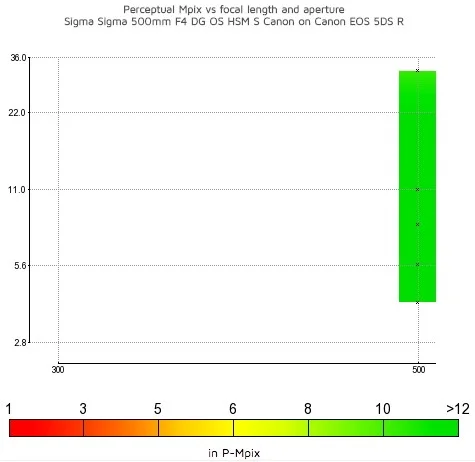
The heaviest vignetting of –1.3 EV occurs at the maximum f/4 aperture, but corner shading is significantly improved at f/5.6 and non-existent from f/8. There’s no geometric distortion to worry about, and the Sigma 500mm f/4 handles chromatic aberrations extremely well, too, with no noticeable fringing evident.
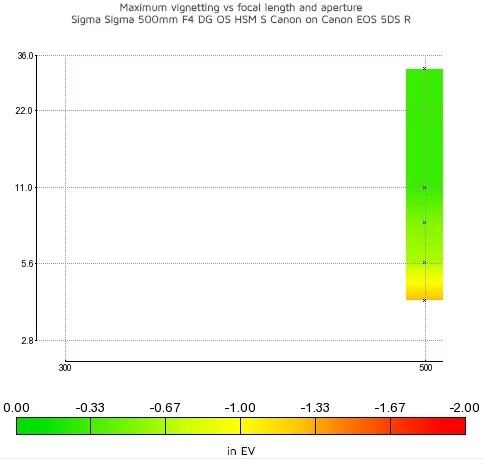
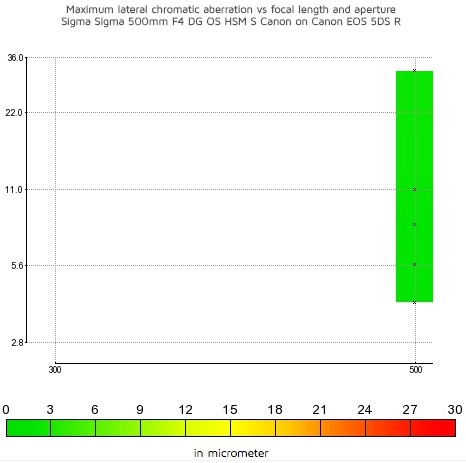
IMAGE QUALITY COMPARED
The Sigma 500mm f/4 achieves remarkably similar scores to those of the Canon EF 500mm f/4L IS II USM own-brand equivalent on the 5DS R, 1D X Mark II, and 5D Mark IV DSLRs. There’s virtually nothing to separate them in terms of distortion, vignetting, or chromatic aberration. The Canon 500mm f/4L II offers slightly improved light transmission of 4.5 T-stop compared to 4.8 for the Sigma, which could help you achieve the same exposure with a 1/3 stop faster shutter speed using the own-brand lens, but it isn’t a significant difference.

On the lower-resolution 1DX Mark II and 5D Mark IV sensors, the Sigma 500mm f/4 boasts a greater overall sharpness score compared to its Canon equivalent. At all apertures the Sigma is fractionally sharper on these DSLRs, but there’s so little difference that it’s hardly noticeable in terms of real-world results. Both lenses achieve close to 80% acutance in the field using apertures between f/4 and f/8, which is excellent.

On the lower-resolution 1DX Mark II and 5D Mark IV sensors, the Sigma 500mm f/4 boasts a greater overall sharpness score compared to its Canon equivalent. At all apertures the Sigma is fractionally sharper on these DSLRs, but there’s so little difference that it’s hardly noticeable in terms of real-world results. Both lenses achieve close to 80% acutance in the field using apertures between f/4 and f/8, which is excellent.

SAMPLE PICTURES

Sigma 500mm F4 OS HSM DG Sport
500mm with 1.4x TC and Nikon D850. Auto ISO, 1/1200, F/8

Sigma 500mm F4 OS HSM DG Sport
500mm with 1.4x TC and Nikon D850. Auto ISO, 1/1200, F/8

Sigma 500mm F4 OS HSM DG Sport
500mm with 1.4x TC and Nikon D500. Auto ISO, 1/1000, F/8

Sigma 500mm F4 OS HSM DG Sport
500mm with 1.4x TC and Nikon D850. Auto ISO, 1/1200, F/8

Sigma 500mm F4 OS HSM DG Sport
500mm with 1.4x TC and Nikon D850. Auto ISO, 1/800, F/8